On October 15, 2026, two car companies showed us two futures.
Tesla unveiled its Roadster near Waco. It drove upside down on a ramp, launched into the air and landed safely.
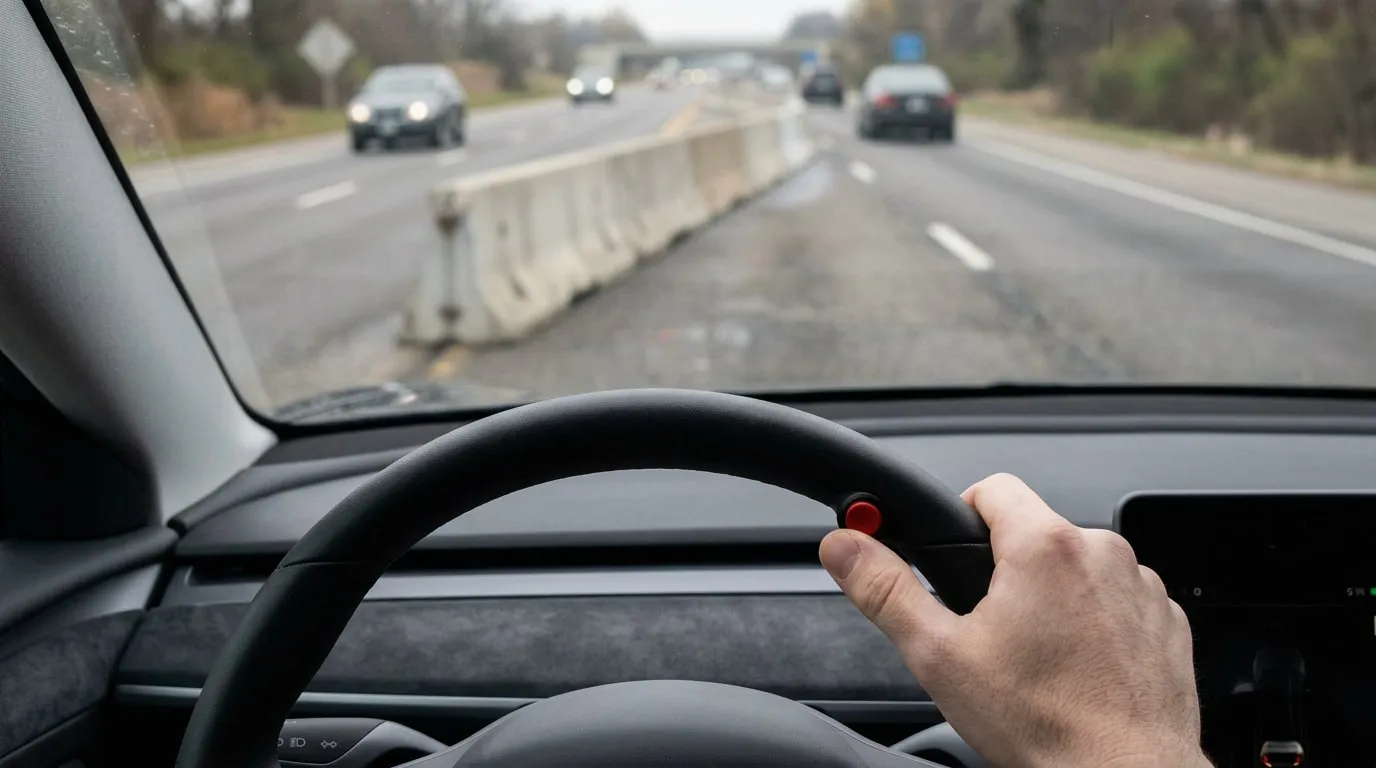
Porsche unveiled the Mission S on a pier in Queens. On its steering wheel is a red button labeled "On your own." Press it, and the driver assistance switches off.
Someone at Porsche has a sense of humor. "On your own" means you're in control. It also means that if it goes wrong, that's on you.
A few years ago I bought a Mercedes GLE 450. Great car. It kept me in my lane, watched my eyes, cruised beautifully on the long haul. Once, a Jersey barrier crept into my lane. The cruise control didn't slow down. When I steered away, the lane assist fought me. It was doing exactly what it was designed to do.
Then I bought my wife a Porsche Cayenne, her favorite car. She'd never liked the Mercedes. She said she couldn't feel part of it. The Cayenne had no lane keeping. On the first morning I nearly drifted into another car.
That's when I realized I had forgotten how to drive. I'd been lulled into the automation so gradually that I never felt it happen. If something had gone wrong in the Mercedes, the time it took me to get back on top of the situation could have cost me, or someone else, their life.
I swore I'd never let that happen again.
Tesla showed us how easy it is to be a passenger. Porsche showed us how easy it is to choose.
Being a passenger isn't the problem. Some of my most productive hours happen when someone else has the wheel. The problem is forgetting you had a choice.
And problems don't send calendar invites. The barrier doesn't wait while you remember how to drive.
So here's the question for every business handing its processes to AI, to vendors, to anyone but its own people:
When the moment comes, what's your choice?
Dominic Luzi · Chief Answer Grape, Management Alchemy